Septic Tank Inspection: What’s Checked and What It Costs (2026)

In this guide
Quick answer
A septic tank inspection is a check of your tank, pipes and drain field by a septic professional. Most cost $200–$900, with a national average of about $550. The EPA recommends an inspection at least every three years, and every year for aerobic and other systems with mechanical parts. A full inspection is strongly advised before you buy a home with septic.
If you own a home that is not on city sewer, a septic inspection is the cheapest insurance you can buy. A few hundred dollars every few years can catch a cracked baffle, a tank that is overdue for pumping or a drain field that is starting to fail — problems that can cost thousands if they are found late. This guide explains exactly what an inspector checks, what each type of inspection costs in 2026, how often you need one and how to read the report.
| Typical cost | $200–$900 (average about $550) |
| How often | Every 3 years; every year for aerobic or pump systems |
| Time on site | About 1–3 hours; a dye test adds 2–4 hours |
| DIY or pro? | Pro — you can do a yard check, but not the inside of the tank |
| Most important time to get one | Before buying or selling a home |
What is a septic tank inspection?
A septic tank inspection is a professional check of the whole system: the main drain from the house, the septic tank, the pipes and distribution box, and the drain field (also called a leach field) where treated water soaks into the soil. The inspector looks for leaks, blockages, damaged parts and signs that the tank is too full or the drain field is overloaded.
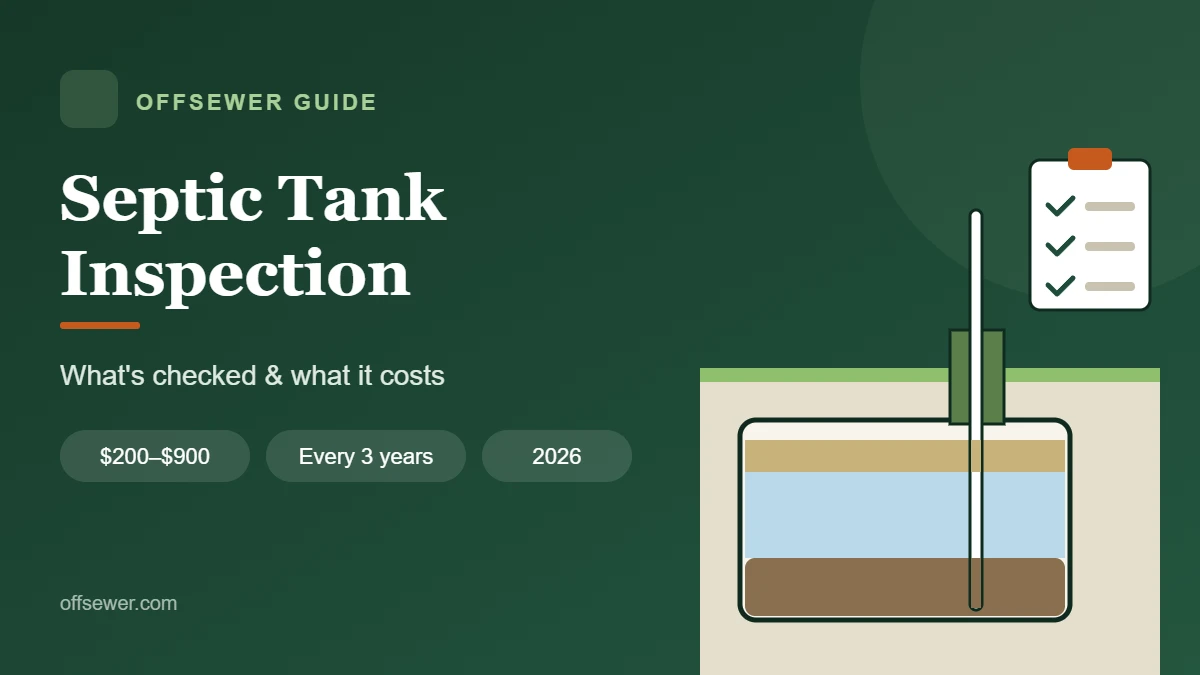
Inside the tank, solids sink to the bottom as sludge, grease and oils float to the top as scum, and the liquid in the middle (effluent) flows out to the drain field. A big part of every inspection is measuring those layers. If too much sludge and scum build up, solids escape into the drain field and clog it — the most expensive failure a septic owner can face.
Types of septic inspections
Not every “septic inspection” is the same. Ask exactly which type you are paying for, because the price and the depth of the check vary a lot.
| Type | What it covers | When it is used | Typical cost |
|---|---|---|---|
| Visual check | Asks about the system’s history, runs water in the house, looks over the yard and drain field for wet spots, odors and lush grass | Yearly check-ups; often part of a general home inspection | $200–$250 |
| Basic (routine) inspection | Visual check plus opening the tank, measuring sludge and scum, checking baffles and the water level | Every 3 years for most homes | $250–$400 |
| Full / real estate inspection | Everything above plus checking the distribution box, pipes and drain field, often with a dye or flow test and a written report | Buying or selling a home; required in some states | $400–$700 |
| Camera inspection | A camera is fed through the pipes to find cracks, root intrusion and blockages | When a problem is suspected | $250–$900 |
What the inspector checks, step by step
A full inspection usually follows these steps. A visual check stops after step 3.
- Finds the tank and drain field. On older properties this can take time, which is why having a site drawing or past pumping records helps.
- Asks about the system’s history: the age of the house and system, when the tank was last pumped and any past repairs.
- Runs water inside the house — sinks, showers and toilets — to check that everything drains freely and nothing backs up.
- Checks the yard for pooling water, soggy ground, sewage odors or unusually green grass over the drain field.
- Opens the tank and checks the liquid level. A level higher than the outlet pipe can mean a blocked outlet or a saturated drain field.
- Measures the sludge and scum layers with a long clear tube often called a “sludge judge”. If they take up about a third of the tank, it is time to pump.
- Inspects the baffles or tees at the inlet and outlet, and the effluent filter if your tank has one. Broken baffles let solids escape to the drain field.
- Looks for cracks and leaks in the tank walls, ideally after the tank has been pumped so the walls can be seen.
- Checks the distribution box and pipes that carry effluent to the drain field, and any pumps, floats and alarms on pump or aerobic systems.
- May run a dye or flow test. Dye or a measured amount of water is sent down the drains to see whether the drain field can absorb it without surfacing in the yard.
At the end, you should receive a written report that records what was checked, the sludge and scum measurements, any problems found and recommended repairs. The EPA advises keeping these service records, along with a sketch of where the tank and drain field are.
Safety: never lean into or enter a septic tank, even to “take a quick look”. Septic tanks contain gases that can make you pass out within seconds. Leave the inside of the tank to a professional, and keep lids secured so children and pets cannot open them.
How much does a septic inspection cost?
Nationally, septic inspections run from about $100 for a quick routine check on a small system to about $1,300 for a detailed inspection of a large home before a sale. Most homeowners pay between $200 and $900, and the average is around $550.
Where you live makes a big difference. These are average full-inspection costs in some of the states with the most septic systems:
| State | Average inspection cost |
|---|---|
| California | $800 |
| New York | $680 |
| Florida | $560 |
| North Carolina | $540 |
| Illinois | $530 |
| Ohio | $520 |
| Pennsylvania | $520 |
| Michigan | $510 |
| Texas | $510 |
| Georgia | $500 |
What changes the price
- Type of inspection. A visual check costs a fraction of a full real estate inspection with a dye test.
- Finding and uncovering the tank. If the lids are buried, digging can add about $50–$250. Installing risers once saves this cost on every future visit.
- Tank size and depth. Bigger and deeper tanks take more time to open and check.
- Local labor costs. High-cost areas can be up to about 1.5 times the national average.
- Pumping at the same visit. Pumping typically adds about $290–$560, but many companies discount the inspection when you book both.
- Extra tests. A camera inspection of the pipes can cost $250–$900 on its own.
Money-saving tip: book the inspection and pumping together, ask for the sludge measurements in writing, and keep every report. A complete service history makes future inspections quicker — and it reassures buyers if you ever sell.
How often should you get your septic system inspected?
The U.S. Environmental Protection Agency recommends that the average household septic system be inspected at least every three years by a septic professional. Tanks are typically pumped every three to five years, so the two visits often line up.
Systems with electrical or mechanical parts — aerobic treatment units, pump tanks, mound systems with pumps — should generally be inspected once a year. In some states and counties, owners of these systems must have a service contract.
Get an inspection sooner if you notice any of these warning signs:
- Slow drains or gurgling sounds in the plumbing
- Sewage smells inside the house or in the yard
- Wet, spongy ground or standing water over the tank or drain field
- Grass that is much greener over the drain field than the rest of the lawn
- A septic alarm that keeps going off
- Sewage backing up into toilets, tubs or floor drains
When to call a pro right away
- Sewage is backing up into the house
- Sewage or gray water is surfacing in the yard
- Your well water tests positive for bacteria and the septic system is nearby
Septic inspection when buying or selling a house
A standard home inspection usually does not include a proper septic inspection. At most, the home inspector may run the water and look over the yard. Because a failed drain field can cost $5,000–$12,000 or more to replace, buyers should order a separate full septic inspection before the inspection contingency in their contract runs out.
Some states require a septic inspection when a home is sold. Massachusetts, for example, requires a “Title 5” inspection in most property transfers, and some counties elsewhere have added similar rules. Check with your local health department or your real estate agent to see what applies where you are buying.
If you are buying
- Hire your own inspector rather than relying on one chosen by the seller.
- Ask for the tank to be pumped as part of the inspection so the walls and baffles can be seen. Pumping right before an inspection can also hide how quickly the tank fills, so ask when it was last pumped.
- Ask the seller for pumping receipts, past inspection reports and the system’s permit or site drawing from the county.
- Confirm the system is sized for the number of bedrooms in the house.
- If the house also has a private well, test the well water too.
If you are selling
A pre-listing inspection lets you fix problems on your own terms instead of negotiating under pressure. Gather your pumping and repair records, make sure the tank lids can be reached, and avoid heavy water use for a day before the inspection.
How to prepare for a septic inspection
- Find your records: past pumping receipts, inspection reports, the county permit and any site drawing.
- Mark or uncover the tank lids if you know where they are. If not, ask the company whether locating is included in the price.
- Clear access to the tank, drain field and any alarm panel. Move vehicles, planters and outdoor furniture.
- Keep pets inside and tell the inspector about any underground sprinklers, cables or propane lines.
- Use water normally in the days before, unless the inspector asks otherwise. The goal is to see how the system really performs.
How to read your septic inspection report
Reports differ by company and state, but most cover the same points. Here is what the common findings usually mean:
| Finding | What it usually means | Typical next step |
|---|---|---|
| Sludge and scum below about one-third of the tank | Tank is working normally | Re-inspect in about 3 years |
| Sludge and scum at or above one-third | Tank is due for pumping | Schedule pumping soon |
| Liquid level above the outlet pipe | Blocked outlet, clogged filter or saturated drain field | Further checks of the outlet and drain field |
| Missing or broken baffle | Solids can escape to the drain field | Repair — usually a modest cost compared with a new drain field |
| Cracks or leaks in the tank | Groundwater can leak in or sewage can leak out | Repair or replace the tank |
| Wet areas or surfacing effluent over the drain field | Drain field is overloaded or failing | Drain field evaluation; repairs can run $1,000–$3,000, replacement $5,000–$12,000 |
If the report recommends major work, get a second opinion and at least two written quotes before you agree to anything.
How to choose a septic inspector
Licensing rules for septic inspectors vary from state to state. Some states license septic inspectors directly; in others, pumpers or installers do the inspections. A national credential to look for is certification from the National Association of Wastewater Technicians (NAWT). Before you book, ask:
- Are you licensed or certified to inspect septic systems in this state or county?
- Exactly what does your inspection include, and is a written report provided?
- Is finding and uncovering the tank included in the price?
- Will you measure the sludge and scum layers and check the baffles?
- Do you also do repairs? (If so, consider whether you want an independent inspector instead.)
Frequently asked questions
How long does a septic inspection take?
A visual check can take under an hour. A full inspection usually takes one to three hours on site, and a dye test can add two to four hours. Finding buried lids on older properties can add more time.
Is a septic inspection part of a home inspection?
Usually not. A general home inspector may run the water and look at the yard, but a proper septic inspection — opening the tank, measuring sludge and checking the drain field — is a separate service you should order yourself.
Does the tank need to be pumped for an inspection?
Not always, but pumping lets the inspector see the tank walls and baffles and check for leaks. For a real estate inspection, pumping during the inspection gives the clearest picture.
Can I inspect my own septic system?
You can do a useful yard check yourself: look for wet spots, odors and extra-green grass over the drain field, and watch for slow drains. Leave opening and measuring the tank to a professional, because septic gases are dangerous.
What happens if my septic system fails inspection?
The report will list what failed and what needs to be fixed. Small problems like a broken baffle or a clogged filter are often inexpensive. A failing drain field is the costly one. If you are buying, you can usually ask the seller to repair it, lower the price or provide a credit.
How much does a septic inspection cost for a house sale?
A detailed real estate inspection typically costs about $400–$700, and up to about $1,300 for large homes or complex systems. Pumping during the inspection adds roughly $290–$560.
Last updated November 10, 2026. Information is general guidance — check local rules and use a licensed professional where required. Read our disclaimer